
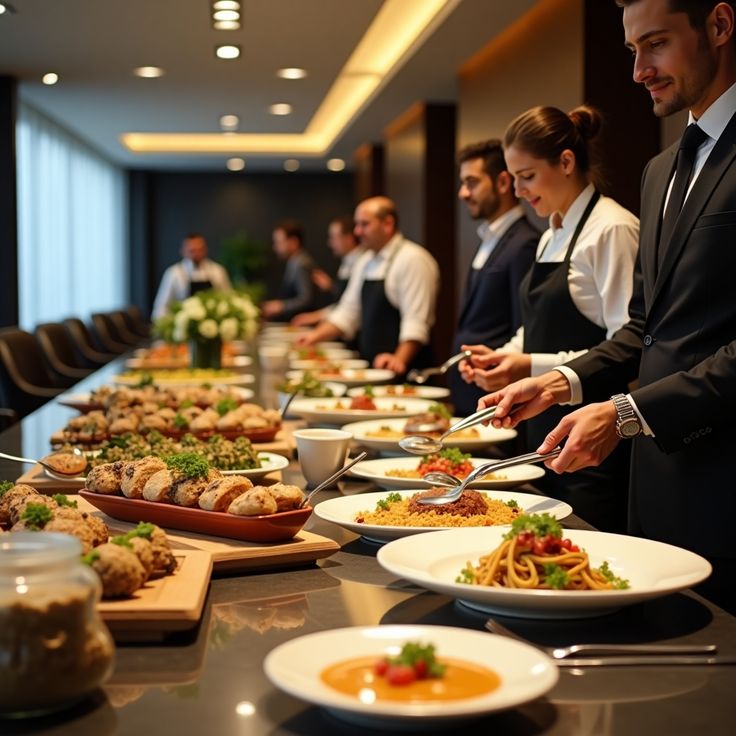
Creating a multi-cuisine wedding menu is an effective way to impress guests in today’s increasingly globalized world.
Gone are the days when a wedding feast meant just one type of cuisine—be it a traditional Kerala Sadya or a standard North Indian buffet. Today, couples travel the world, watch global cooking shows, and have friends from diverse backgrounds. They want their big day to reflect this variety.
However, planning a multi-cuisine wedding menu is not as simple as picking random dishes from a catalogue. It requires a delicate balance. If you serve a spicy Chettinad Chicken alongside a delicate Italian Risotto without a plan, the flavors might clash, leaving guests confused rather than delighted.
At Harvest Caterers, we have mastered the art of culinary diversity. Serving clients across Ernakulam, Thrissur, and Thiruvananthapuram, we know how to blend local traditions with an international flair.
In this guide, we will reveal the secrets behind crafting a cohesive, crowd-pleasing multi-cuisine wedding menu that leaves your guests raving about the food for years to come.
1. The Golden Rule: Balance is Everything
The biggest mistake people make with a multi-cuisine wedding menu is trying to do too much. They want 10 starters, 15 mains, and 3 global counters. This often leads to “menu fatigue.”
The secret is balance. You need a mix of textures, spice levels, and cooking styles.
- Spice vs. Mild: If your Indian section is heavy on spice (like Mutton Rogan Josh or Beef Fry), your Continental section should offer relief (like a creamy Mushroom Stroganoff or a subtle Grilled Fish).
- Heavy vs. Light: You cannot have everything be deep-fried or rich in cream. A perfect multi-cuisine wedding menu balances rich gravies with light stir-frys or fresh salads.
- Crispy vs. Soft: Ensure there is a mix of textures. If you have soft Appams, pair them with a crispy starter or a crunchy salad.
When we design a menu at Harvest Caterers, we treat the entire spread as a symphony. Every dish plays a role, ensuring that the guest’s palate is excited, not overwhelmed.
2. Structure Your Courses Strategically
To make a multi-cuisine wedding menu work, you need to know where to place the different cuisines. You don’t want a chaotic plate where noodles get mixed with Sambar.
Here is the structure that works best for modern Indian weddings:
Appetizers: The Global Playground
This is where you can be most adventurous. Appetizers are finger foods, so guests treat them as individual experiences.
- Idea: Serve Chinese Spring Rolls, Lebanese Falafel, and Kerala Cutlets simultaneously. Since they are eaten separately, the flavors don’t clash.
Main Course: The Comfort Zone
For the main meal, people usually prefer to stick to 1 or 2 compatible cuisines on their plate.
- Strategy: Keep the Indian breads (Roti/Naan) and rice (Biryani/Pulao) as the anchor. Then, offer sides that pair well. A multi-cuisine wedding menu works best when the gravies can be eaten with the staple carbs. For example, a Thai Green Curry goes surprisingly well with steamed rice or even Appam!
Dessert: The Fusion Finale
End with a bang. This is where fusion shines.
- Idea: A Gulab Jamun Cheesecake or Tender Coconut Soufflé. It bridges the gap between the East and West perfectly.
3. The “Safe” Favorites vs. The Exotic
When planning a multi-cuisine wedding menu, you must remember your audience. While you and your friends might love Sushi or Sushi-style raw fish, your grandmother or elderly relatives from the village might find it unappealing.
The secret is the 70-30 Rule:
- 70% Comfort Food: Dishes that everyone recognizes and loves (Biryani, Appam, Butter Chicken, Paneer).
- 30% Exotic/New: Dishes that add the “wow” factor (Lasagna, Dim Sums, Mexican Tacos).
By following this ratio in your multi-cuisine wedding menu, you ensure that the adventurous eaters are excited, while the traditional eaters still leave feeling full and satisfied. At Harvest Caterers, we always ensure that the “comfort” section is executed with authentic perfection, so the foundation of the meal is solid.
4. Regional Pairings That Work
Not all cuisines go together. Serving Japanese Sushi alongside spicy Andhra Curry is a recipe for a stomachache.
Here are some winning combinations we recommend for a multi-cuisine wedding menu in South India:
- The “North-South” Blend:
- Why it works: It covers all bases for Indian guests.
- Menu: Kerala Parotta with Beef Roast (South) + Butter Naan with Paneer Butter Masala (North).
- The “Indo-Chinese” Kick:
- Why it works: Indians love spicy Chinese food.
- Menu: Fried Rice and Noodles pair excellently with Gobi Manchurian or Chilly Chicken. This is a staple in any multi-cuisine wedding menu.
- The “Continental-Kerala” Twist:
- Why it works: The mild flavors of Continental food balance the spice of Kerala dishes.
- Menu: Grilled Chicken in Pepper Sauce sits nicely alongside a light Appam and Stew.
5. Live Stations: The Best Way to Separate Flavors
One of the logistical challenges of a multi-cuisine wedding menu is aroma cross-contamination. You don’t want your delicate pasta smelling like strong fish curry.
The best solution is to use Live Food Stations. As we discussed in our previous guide on Live Food Stations for Weddings, these counters physically separate the cuisines.
- Set up the Italian Pasta station in one corner.
- Set up the Tandoor/Kebab station in the outdoor area (to manage smoke).
- Keep the Chaat counter near the entrance.
By physically spacing out these zones, you allow guests to “travel” from one cuisine to another. It creates a food court vibe where every cuisine gets its own spotlight. This is a hallmark of a well-organized multi-cuisine wedding menu.
6. Authenticity is Key
The danger of offering many cuisines is becoming a “Jack of all trades, master of none.” There is nothing worse than eating “Chinese Noodles” that taste like Indian Upma, or “Pasta” that is drowning in tomato ketchup.
If you are going to include a specific cuisine in your multi-cuisine wedding menu, it must be authentic.
- Italian: Use real olive oil, parmesan, and herbs—not just white sauce and cheese.
- North Indian: The Dal Makhani must be slow-cooked overnight.
- Chinese: Use high heat (Wok Hei) and authentic soy sauces.
At Harvest Caterers, we have specialized chefs for different departments. Our Tandoor chef does not cook the Pasta. Our South Indian master does not make the Manchurian. This dedication to specialization ensures that every part of your multi-cuisine wedding menu tastes authentic.
7. Customization for Dietary Needs
A major advantage of a diverse menu is inclusivity. As mentioned in our article on the Customized Catering Menu, guests have different needs.
A multi-cuisine wedding menu naturally caters to everyone:
- Vegetarians: Can enjoy the extensive North Indian Paneer and Dal options.
- Vegans: Can stick to the Asian stir-frys or South Indian vegetable curries.
- Kids: Usually love the mild Italian Pasta or simple Noodles.
- Elders: Can stick to the traditional Kerala rice and curry.
This diversity makes the host’s job much easier, as you don’t have to worry about anyone going home hungry.
8. Presentation and Signage
When you serve a multi-cuisine wedding menu, some dishes might be unfamiliar to your guests.
- What is “Au Gratin”?
- Is this “Hummus” spicy?
Good catering is about communication. We ensure that every dish is clearly labeled. For exotic items, we add a small description card (e.g., “Hummus: A creamy chickpea dip from the Middle East, best eaten with Pita bread”).
This small detail encourages guests to try new things without fear. It elevates the experience from a simple meal to a culinary discovery.
Common Mistakes to Avoid
Before you finalize your multi-cuisine wedding menu, watch out for these pitfalls:
- Overcrowding the Plate: Don’t offer 20 main course items. Guests will take a tiny spoon of everything, resulting in a “khichdi” (mess) on the plate. Stick to 5-6 solid main dishes.
- Ignoring Seasonality: Don’t ask for a fresh strawberry salad in the middle of a Kerala monsoon. Stick to fresh ingredients.
- Forgetting the Drinks: Your beverages should match the food. If you have a global menu, offer a mix of fresh juices and international mocktails, not just water and soda.
Conclusion: A World of Flavor on One Plate
Crafting a multi-cuisine wedding menu is about more than just food; it is about bringing people together. It reflects the modern Indian family—rooted in tradition but open to the world.
Whether you want to pair the rustic spices of Kerala with the creamy richness of Italy, or the fiery zest of Schezwan with the smoky flavors of the Tandoor, the possibilities are endless.
The secret lies in expert planning, authentic preparation, and smart presentation.
At Harvest Caterers, we love the challenge of diversity. We don’t just cook food; we curate experiences. Let us help you design a menu that takes your guests on a delicious journey around the world, right here in Kerala.
Ready to plan your global feast?
Let’s create a menu that everyone will love.
Contact Harvest Caterers Today to start building your dream menu.